Solar Panels and Battery Backup: How They Connect to Your Home's Electrical System
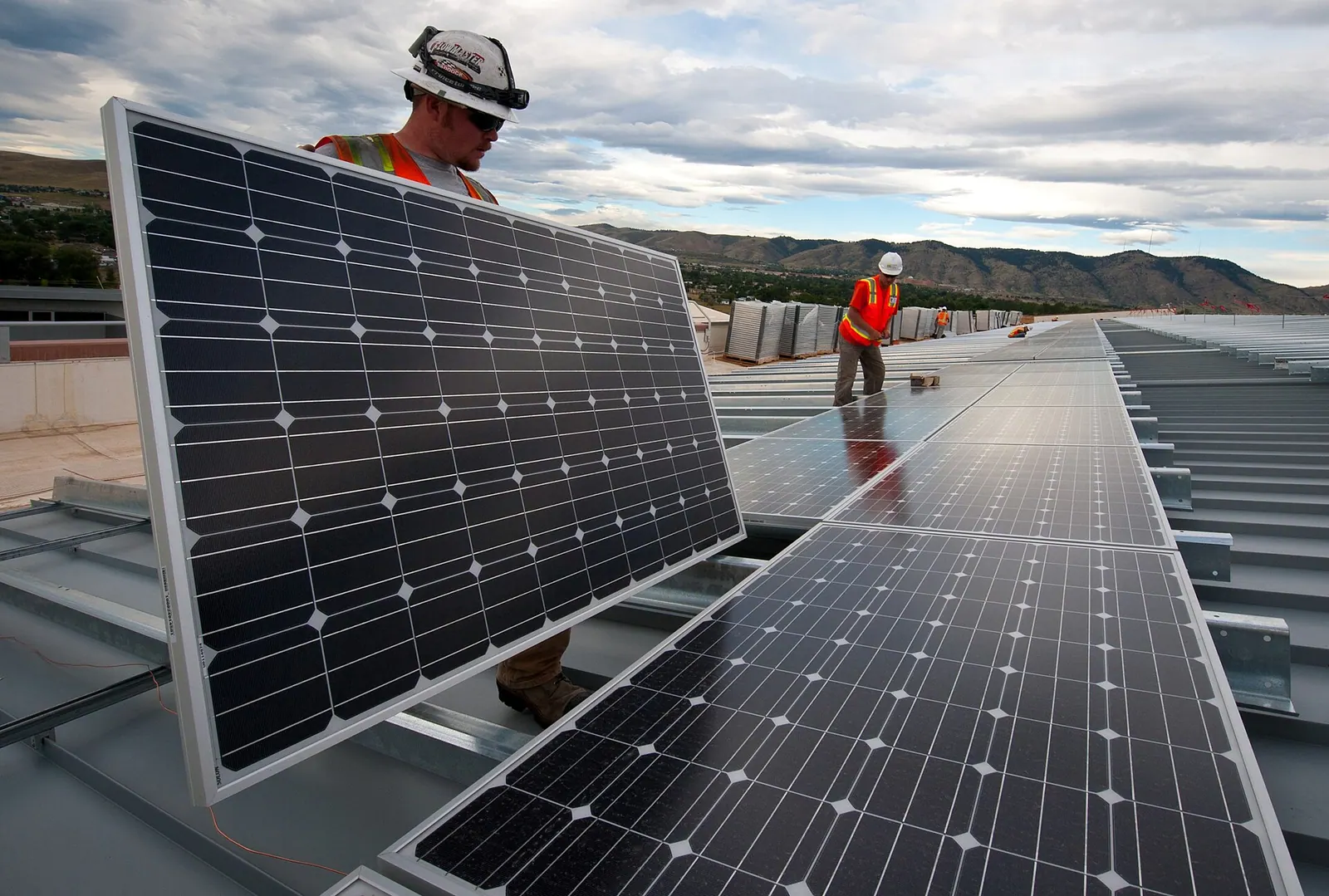
Public domain, via Wikimedia Commons
If you're looking at solar for your home in Sagle, Sandpoint, Coeur d'Alene, or anywhere in Bonner or Kootenai county, the electrical side is simpler than the sales pitch makes it sound. Panels make DC power, an inverter turns it into AC power your house can use, and a few pieces of equipment decide where that power goes: into your house, into a battery, or back onto the grid. Understanding these pieces helps you ask better questions when you're getting quotes.
What you need
- Solar panels, typically wired in strings and mounted on the roof or on ground racking
- An inverter, either one central string inverter or several microinverters mounted behind each panel
- A production meter or monitoring equipment to track how much power the panels are making
- A battery system, if you want backup power, with its own inverter or a hybrid inverter that handles both solar and battery
- A backup subpanel or automatic transfer switch, if you want certain circuits to run during an outage
- Your existing main electrical panel, and in many older homes, an upgrade to that panel or its main breaker
- A dedicated breaker for the solar connection, sized to code for the inverter output
- Utility interconnection paperwork, since Avista and other North Idaho utilities require a signed agreement before you go live
Step by step
- Power leaves the panels as DC. Each solar panel produces direct current. On its own, DC power isn't usable by your household outlets, lights, or appliances, which all run on alternating current.
- The inverter converts DC to AC. A string inverter sits near the main panel and converts power from a whole group of panels at once. Microinverters do the conversion at each individual panel, which can help if part of your roof gets shaded during the day. Either way, this is the step where solar power becomes power your house can actually use.
- AC power feeds into your main panel. The inverter connects to a dedicated breaker in your main electrical panel, or in some cases a small subpanel next to it. From there, solar power mixes with grid power to run your home. Your house always pulls from whichever source is available first, solar during sunny hours, grid power the rest of the time.
- Extra power goes to the meter, a battery, or both. If your panels make more power than your house is using at that moment, the extra either goes back out through your utility meter (net metering, where available) or charges a battery if you have one installed. A battery system usually includes its own inverter and a small backup subpanel wired to circuits you want to keep alive during an outage, things like a well pump, refrigerator, and a few lights.
Where this goes wrong
The most common problem isn't the panels themselves, it's what they're connected to. A lot of homes in Bonner and Kootenai county still have 100 amp electrical panels, some of them decades old. Adding solar and battery equipment to an undersized or outdated panel can overload it, or the panel simply doesn't have room for the extra breakers. This is one of the most frequent surprises homeowners get partway through a solar quote: the panel needs to be upgraded to 200 amps before solar can even go in.
Backup wiring is another spot where people get burned. A battery only backs up the circuits it's physically wired to. Homeowners sometimes assume the whole house will run during an outage, then find out during the next power failure that only a handful of outlets are live. This isn't a defect, it's just how the system was designed, but it needs to be spelled out clearly before installation, not discovered later.
Backfeeding a panel incorrectly is a real safety issue. Solar breakers have to be sized and placed according to code, usually limited to 120% of the panel's busbar rating when combined with the main breaker. Get this wrong and you've got a panel that can overheat under certain conditions. This is code-driven, not a guess, and it's checked during permitting and inspection for good reason.
Battery systems also need their own disconnects and often their own dedicated space, sometimes in a garage or utility room rather than right next to the main panel. Cramming a battery into a spot that wasn't designed for it, or skipping proper ventilation and clearance, causes problems down the road, especially with lithium battery systems that have specific temperature requirements. North Idaho winters mean outdoor-rated or heated enclosures matter more here than they would in a milder climate.
Finally, some homeowners run into permitting and utility approval delays because the interconnection agreement wasn't filed correctly, or the system as installed doesn't match what was submitted. This doesn't cause a physical hazard, but it can hold up your ability to actually turn the system on and get credit for the power you produce.
When to stop and call someone
Solar and battery installation is not a do-it-yourself electrical project, full stop. This isn't about complexity for its own sake, it's about the fact that you're tying a new power source directly into your home's main electrical panel, which means mistakes can cause fires, damage equipment, or create a shock hazard for utility workers on the line outside your house. Utilities require a licensed electrician's signature and a formal inspection before they'll let a solar system connect to the grid, and for good reason.
If you're at the stage of just gathering information, a good next step is to have someone look at your main panel's age, amperage, and physical condition before you get too far into shopping for solar quotes. If it's an older 100 amp panel, or if you've already had other electrical issues in the house, that's worth addressing early so it doesn't become a surprise added cost mid-project.
If you already have solar or a battery installed and something's not working right, breakers tripping, the inverter showing an error, backup circuits not switching over during an outage, that's also not a troubleshoot-it-yourself situation. These systems have safety shutoffs for good reason, and bypassing or resetting things without understanding why they tripped can make a small problem into a bigger one.
Sageland Electric works with homeowners, cabin owners, and builders across Bonner and Kootenai county on panel upgrades and the electrical groundwork that solar and battery systems depend on. Whether you're just starting to plan or need an existing system's wiring checked out, it's worth getting a straight answer about what your home's electrical system can handle before you commit to equipment.
Need an electrician in North Idaho?
Family-owned, 5-star rated, and 21 years serving Bonner and Kootenai counties.
Request service