Rural Power Problems: Why Voltage Drop Happens on Long Idaho Driveways
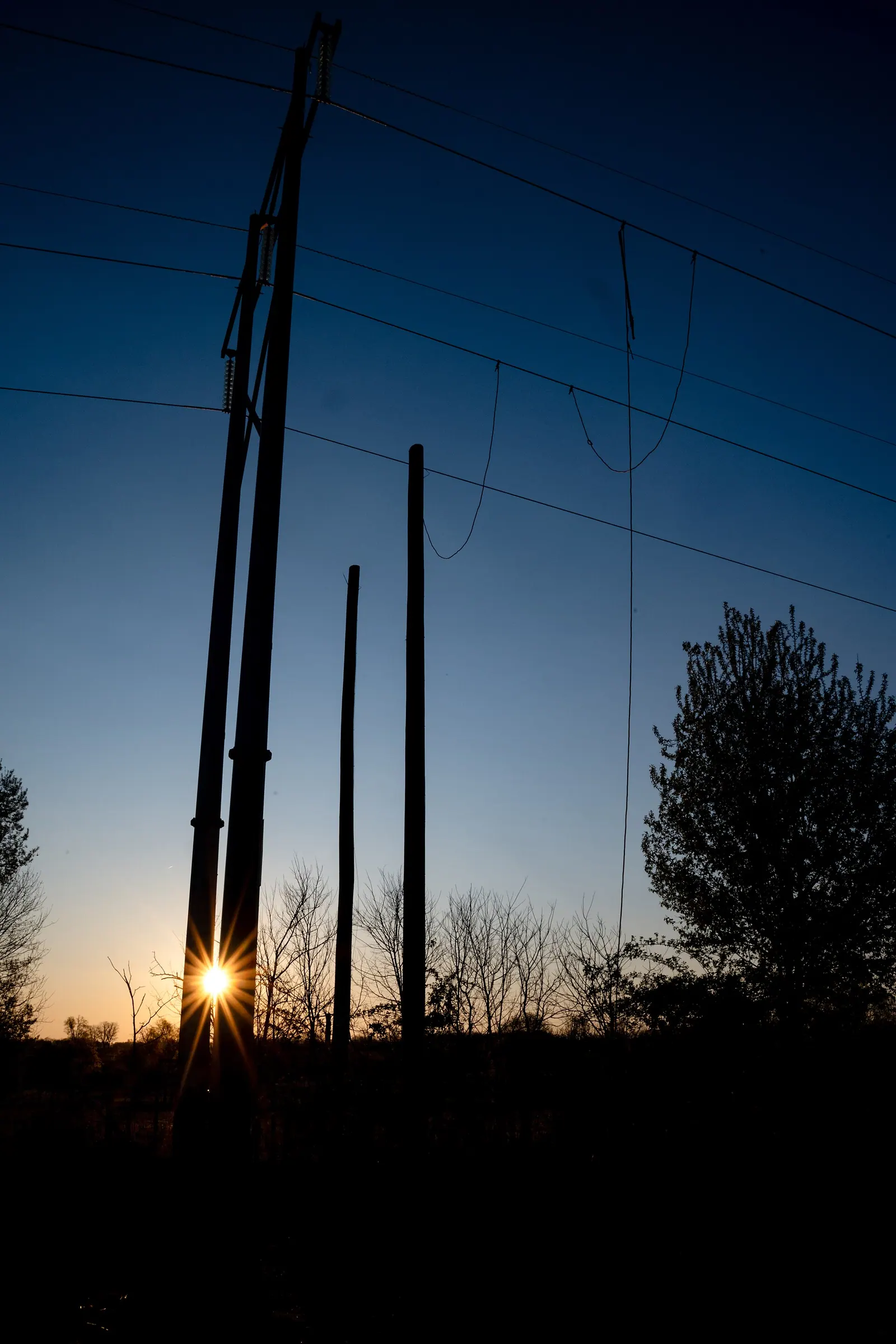
Public domain, via Wikimedia Commons
This is for anyone with a house, shop, barn, or cabin fed by a long run of underground or overhead wire, where things work fine near the meter but get weak farther out. Lights dim when the well pump kicks on. A table saw bogs down or trips a breaker that never trips in town. The single most important decision is wire size matched to both distance and load, not just whether the wire will physically reach the building.
Decide this first
Voltage drop is not about distance alone. It is distance combined with how much current is flowing through the wire. A long run feeding a single light fixture may need nothing special. The same length feeding a well pump, an air compressor, or a sub-panel with several circuits can drop voltage enough to cause real damage. Before anyone talks about wire gauge, conduit, or trenching, figure out the actual length of the run and the actual load it needs to carry at once. Everything else follows from that one calculation.
What to look for
Accurate distance, not a guess
Pace it off, use a wheel, or pull the number from a site plan. People routinely underestimate driveway length by 20 to 30 percent, especially on winding rural roads. A 400 foot guess that is actually 550 feet changes the wire size needed. Measure the real route the cable will follow, including any bends around rock or water, not the straight line distance.
Real load, not outlet count
A sub-panel with eight circuits doesn't need to carry eight circuits worth of current at the same time, but it does need to handle the realistic peak. Add up what could reasonably run at once: well pump, shop tools, space heater, a few lights. That number, not the panel's total breaker capacity, is what the wire has to be sized for. This is where a lot of driveway power projects go wrong, because people size for what's installed today and ignore what gets added in five years.
A target voltage drop percentage
The general rule of thumb used in the trade is to keep voltage drop under 3 percent on a branch circuit and under 5 percent total from the source to the farthest outlet. On a 240-volt residential service, that 5 percent is roughly 12 volts. It sounds small, but it's the difference between a well pump running within its rated range and one that runs hot, cycles more, and wears out early. Any electrician sizing a long underground run should be able to show the math, not just estimate.
What to ignore
Skip anything marketed as a voltage drop fix that isn't actually about wire size. Surge protectors, whole-house power conditioners, and "premium" outlet covers do nothing for voltage drop. Those products solve different problems: spikes, noise, and physical protection. Voltage drop is a wire gauge and length problem, and it only has wire gauge and length solutions, sometimes combined with adjusting where a sub-panel sits on the property.
Also ignore panel amperage as a stand-in for wire capacity. A 200 amp panel at the house doesn't mean the wire feeding a detached shop 600 feet away can carry 200 amps without significant drop. The panel rating and the feeder wire rating are two separate questions, and long rural runs live or die on the second one.
Common mistakes
The most common mistake is sizing wire for the shortest distance in the price quote rather than the actual route. Direct burial cable and conduit runs almost never travel in a straight line on rural land. Trenching has to go around septic fields, wells, rock outcrops, and existing utilities, which adds real footage. If the wire size was calculated on a shorter, idealized distance, the finished run ends up under capacity even though it was "sized correctly" on paper.
Another common mistake is treating a barn, shop, or guest cabin as a low priority load and using the smallest wire that meets minimum code for the circuits installed at the time. Then a well pump gets added, or a heat pump, or a welder, and the existing feeder can't support it without significant voltage drop. At that point the choices are limited: run a whole new feeder, which means another trench and another disruption, or live with a system that underperforms and shortens the life of motors and pumps on the far end.
A third mistake is mixing aluminum and copper without understanding the tradeoffs. Aluminum feeder wire is cheaper and common on long runs because it's lighter to pull, but it needs to be sized up compared to copper to carry the same load with similar voltage drop, and the connections need anti-oxidant compound and proper torque to avoid loosening over time. On a long rural run, a loose aluminum connection at either end adds resistance on top of the distance-related drop, and that combination is often what actually causes symptoms, not the wire gauge alone.
FAQ
What does voltage drop actually look like day to day?
Lights that dim noticeably when a well pump or large appliance starts. Motors that run hotter than normal, hum louder, or take longer to reach speed. Breakers that trip under load at the far building but never trip on circuits closer to the meter. Electronics or LED drivers at the far end that behave oddly or fail sooner than the same equipment elsewhere in the same house. None of these prove voltage drop by themselves, but the pattern of "only at the far building" or "only under load" points that direction.
Can voltage drop be fixed without digging up the existing wire?
Sometimes, sometimes not. If the existing conduit has room and the correct pull string or capacity, a larger conductor can occasionally be pulled through without a new trench, which saves a significant amount in labor. If the conduit is full, undersized, or direct buried cable without conduit, a new run is usually the only real fix. A qualified electrician can inspect the existing installation, check conduit fill, and give an honest answer before committing to either approach.
What does it generally cost to run power a long distance to a detached building?
This varies a lot based on distance, soil conditions, whether trenching is done by machine or by hand around obstacles, wire size, and whether a new sub-panel is needed at the far end. As a rough range, rural underground feeder projects in North Idaho commonly run from a few thousand dollars for a short, simple run to well over ten thousand for longer distances with rock, water crossings, or a full sub-panel installation. Getting an actual site visit and measurement is the only way to get a number that means anything for a specific property.
Is this a DIY-safe project?
Sizing wire for voltage drop involves real calculations tied to the National Electrical Code, and a mistake here doesn't just mean poor performance, it can mean overheated wire, fire risk, and damaged equipment. Trenching and pulling conductor for a feeder over 100 feet, especially anything over 100 amps or crossing into a permitted structure, should go through a licensed electrician who pulls the permit and does the load calculation correctly. Sageland Electric handles this kind of rural feeder and sub-panel work regularly across Bonner and Kootenai counties, and can measure the actual route and load before recommending a wire size, rather than guessing from a description over the phone.
Need an electrician in North Idaho?
Family-owned, 5-star rated, and 21 years serving Bonner and Kootenai counties.
Request service