Extension Cords and Power Strips: When You're Overloading Your Outlets
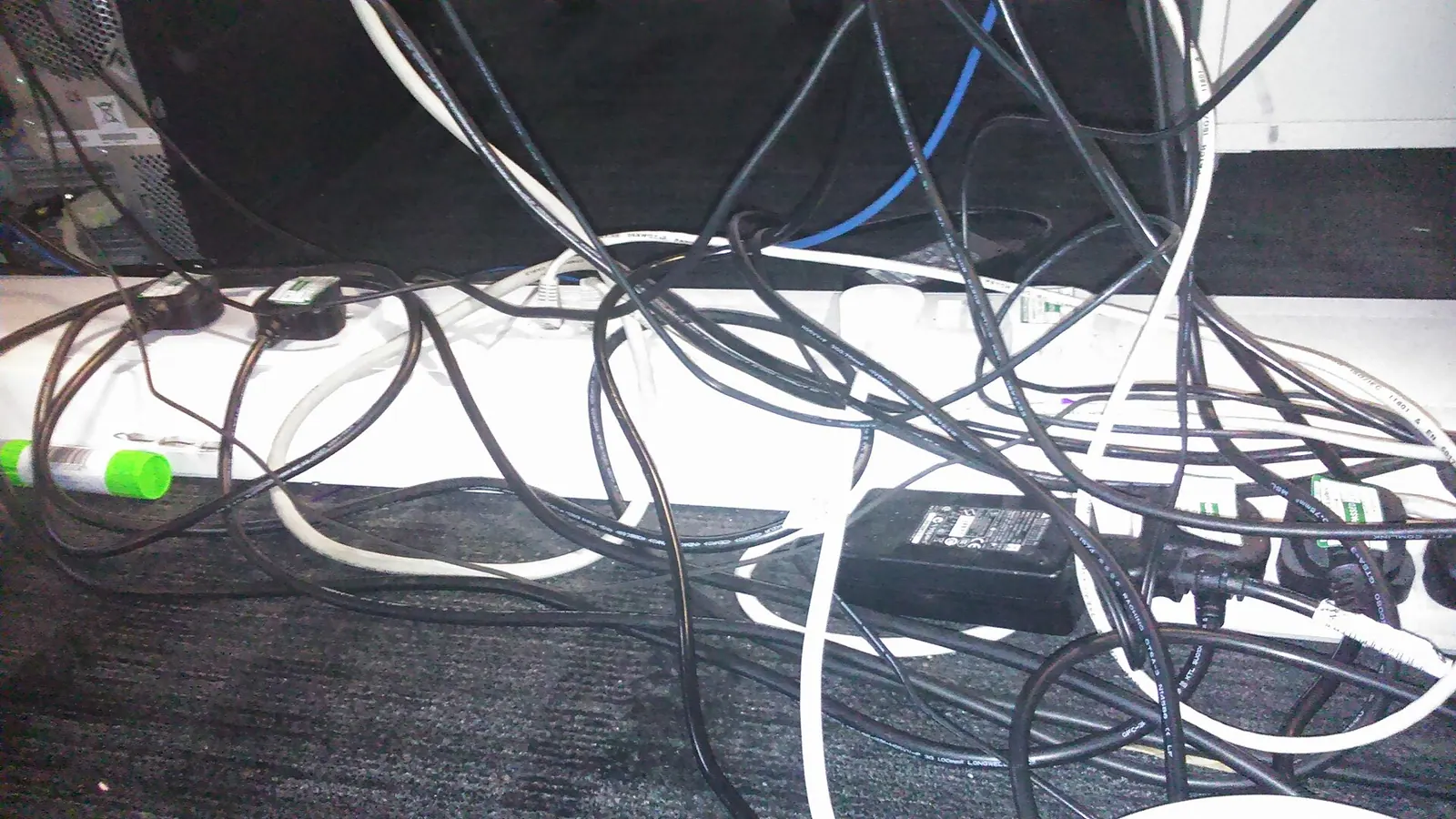
CC0, via Wikimedia Commons
Extension cords and power strips are meant to be temporary. Most overload problems in North Idaho homes and cabins come from treating them like permanent wiring, running space heaters or shop tools through them, or plugging one strip into another until a single outlet is feeding half a room. If a cord or strip feels warm, smells like hot plastic, or trips a breaker, that is not a coincidence. It is the wiring telling you it has more load than it was built for.
What you need
- A power strip rated for the actual load, not just the number of outlets (look for 15A or 20A rating on the label)
- Heavy-duty extension cords, 12 or 14 gauge for anything drawing real current, not the thin cords made for a lamp
- A plug-in outlet tester or non-contact voltage tester, $10 to $25 at any hardware store
- A list of what is plugged into each strip or cord, with rough wattage or amperage for each device
- Manufacturer info on any space heater, shop tool, or appliance you regularly plug into a cord or strip
Step by step
- Check the rating on the strip or cord. Most household power strips and extension cords are rated 13 to 15 amps, some heavier ones at 20 amps. That number should be printed on the strip itself or the cord's tag. A standard household circuit is also usually 15 or 20 amps, so a fully loaded strip can already be close to what the whole circuit can handle, before you count anything else plugged into that same circuit elsewhere in the house.
- Add up what is actually plugged in. Watts divided by volts gives you amps (roughly, at 120V). A space heater alone can pull 12 to 15 amps. A window AC unit, a shop compressor, a hair dryer, these are all heavy draws. Two of them on one strip, plus a few phone chargers, can put you at or past the strip's rated limit even though it looks like nothing is happening.
- Feel for heat and look for damage. Unplug things and run your hand near the strip or cord after an hour of normal use. Warm to the touch is a warning sign. Check the cord itself for cracked insulation, discoloration near the plug, or a plug that feels loose or wiggly in the outlet. Any of these mean stop using it, not keep an eye on it.
- Test the outlet itself. A cheap plug-in tester will tell you if the outlet is wired correctly (open ground, reversed polarity, etc.). If the outlet is warm before you plug anything major into it, or if the breaker for that circuit trips more than once in a while, the problem may not be the cord or strip at all. It may be the circuit or the outlet, and that is a different fix.
Where this goes wrong
The most common failure is daisy-chaining, plugging one power strip into another to get more outlets. Each strip is only rated for its own load, and chaining them does not add capacity, it just moves the same bottleneck further down the line while making it look like you have more outlets than you actually do. This is one of the more common causes of overheated cords we hear about in older Bonner and Kootenai county homes and cabins that were not built with enough outlets for modern electronics.
Running cords under rugs or through doorways is another. It hides fraying and heat buildup, and foot traffic or furniture can pinch the cord over time. A pinched cord under load is a slow path to a melted spot or a short.
Using an indoor-rated extension cord outdoors, or leaving an outdoor cord out through a North Idaho winter, causes the insulation to crack and stiffen. Cold makes cheap cord jacketing brittle. If you run a generator or holiday lighting off cords left outside, check them every season, not just the first year.
Space heaters are a recurring problem, especially in cabins, shops, and older homes without enough baseboard or forced-air heat in every room. A space heater on a 15A strip or cord, especially an older cord that has already lost some of its capacity to age, is a common cause of house fires nationally. If you are using a space heater regularly through the winter, that is a sign the room needs a real heating source or a dedicated outlet, not a workaround.
Treating a cord as permanent wiring is the underlying issue behind most of the above. Cords and strips are built to move with you, for temporary setups, tools, and electronics you plug in and unplug. Running one to a shed, a detached garage, or a finished basement room year-round, taped along a baseboard, is exactly the kind of use that shows up later as a melted outlet or a tripped breaker that will not reset.
When to stop and call someone
Call an electrician if an outlet or switch plate is warm or discolored, if you smell a faint burning or plastic smell near an outlet or strip, or if a breaker trips repeatedly under a load that used to work fine. These are signs of a wiring problem, a loose connection, or a circuit that is genuinely undersized for what you are asking it to do, not something a heavier cord will fix.
If you find yourself running an extension cord to the same spot for months at a time, whether that is a workshop, a home office, a finished bonus room, or a detached structure, that is a sign you need an actual outlet or a new circuit there, not a longer or thicker cord. This is especially common in North Idaho cabins and older homes that were wired decades ago for a lot less electronics and equipment than people run today.
Also call if you are not sure what a room's circuit can actually handle. Older homes in Bonner and Kootenai counties sometimes have circuits shared across more rooms than current code would allow, or wiring that has degraded over the decades. A licensed electrician can check the panel, trace what is on each circuit, and tell you honestly whether you need more outlets, a dedicated circuit for a specific room or appliance, or a panel upgrade. Guessing at this with a heavier extension cord just delays the real fix and adds risk in the meantime.
Sageland Electric handles this kind of assessment regularly for homes, cabins, and small businesses across North Idaho, and can tell you plainly whether a room needs a new outlet or your whole panel needs a look.
Need an electrician in North Idaho?
Family-owned, 5-star rated, and 21 years serving Bonner and Kootenai counties.
Request service