Ceiling Fan Installation: Why Your Existing Wiring May Not Be Enough
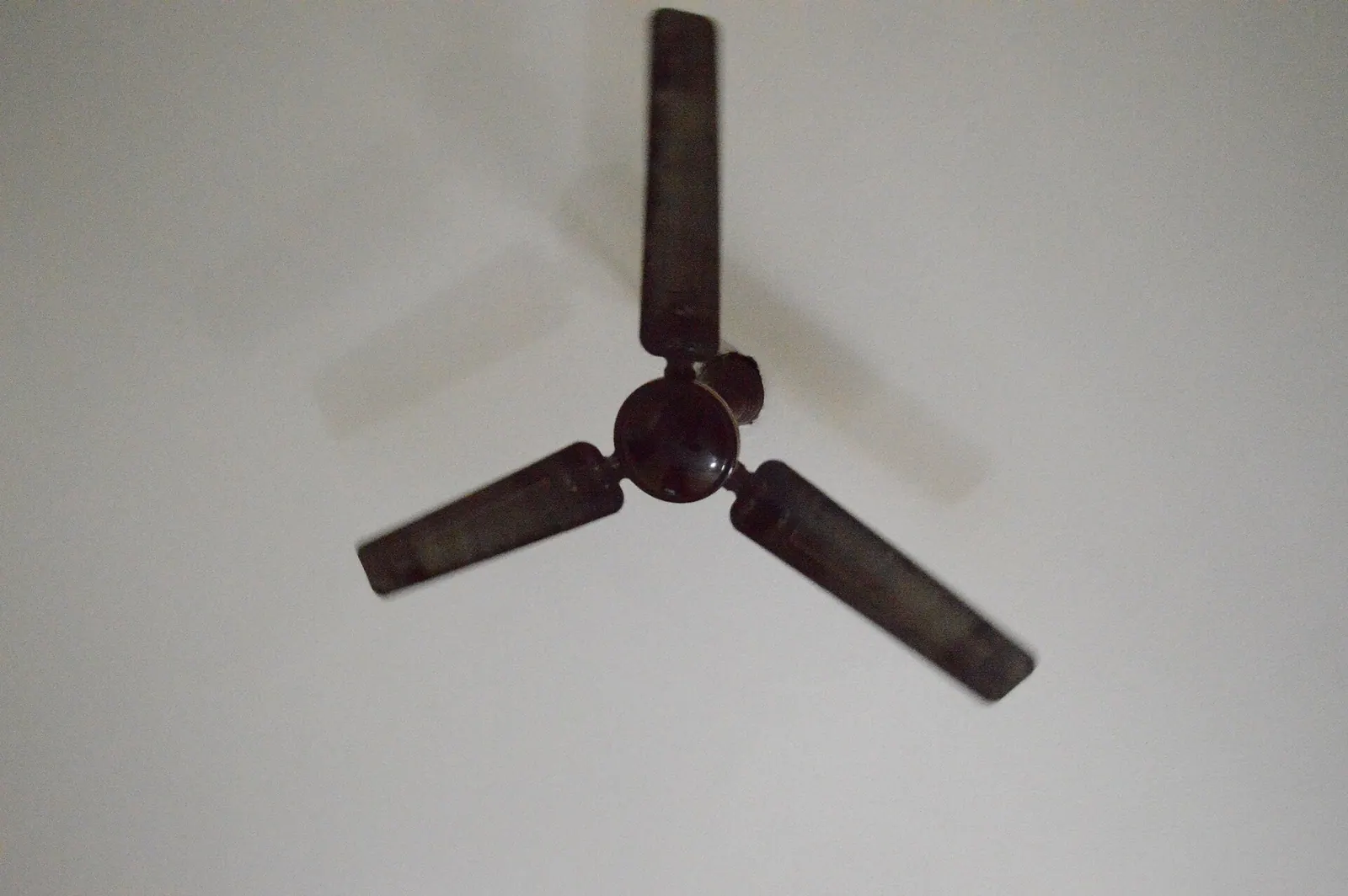
CC0, via Wikimedia Commons
You're swapping an old light fixture for a ceiling fan. The wiring looks fine, the box is already up there, so it should just be a bolt-in job. Except a lot of the time it isn't, because the box holding that light was never built to carry a spinning fan, and the wiring behind it may not give you the switching you actually want.
What the problem actually looks like
The most common sign is a ceiling box that's a plain round pancake box, sometimes plastic, nailed or screwed lightly to a joist or just to drywall with no direct structural connection. It held a five-pound light fixture without complaint for twenty years. Add a fan, even a light one, and you've got 15 to 50 pounds of moving mass with vibration and torque that a light-duty box was never rated for.
Other times the box is fine but there's only one switch leg coming in, so a fan with a light kit has no way to run the fan and light separately. Or the wire itself is old two-conductor cloth wiring with no ground, aluminum branch wiring from the 60s and 70s, or a splice buried in the ceiling that was never meant to be reopened. You find these things out mid-project, usually after the old fixture is already down and you're standing on a ladder looking at a mess of wire nuts.
Why it happens
Ceiling boxes are rated for specific loads. Standard boxes are rated for fixtures up to about 50 pounds if they're properly secured to framing. Fan-rated boxes are a different animal, built with heavier metal, a direct brace to the joist or a listed fan brace bar, and hardware designed to resist the wobble and torque a spinning fan creates over years of use. A box rated for a static light fixture is not automatically rated for a fan, even if the fan itself weighs less than the old light did. It's about motion and vibration, not just weight.
A lot of older North Idaho homes and cabins have ceiling boxes that were installed to code at the time, but the code and the hardware have moved on. Boxes from the 70s through the 90s were often just nailed to the side of a joist, which is fine for a light but marginal for a fan. In some cabins, the box isn't attached to framing at all. It's just floating in the drywall, held by friction and hope.
The wiring side is a separate issue. Many rooms were wired with a single switch controlling one hot wire to the fixture. Modern fan and light combos usually want two switched circuits, one for the fan speed and one for the light, or at minimum a remote/wall control setup that needs a neutral and a way to separate functions. If the box only has one switch leg, you either need to add a wire, use a remote-control kit that fakes the separation, or accept that the fan and light will always turn on and off together.
What we do about it
The first step is always pulling the old fixture down and actually looking at the box, not guessing from the ground. That means checking whether it's a listed fan-rated box, whether it's screwed directly into solid framing or attached with an adjustable brace bar rated for fan loads, and whether the wiring inside is intact, grounded, and has enough conductors for what the new fan needs.
If the box isn't fan-rated, the fix usually means one of a few things:
- Replacing the box with a listed fan-rated box screwed to a joist, when there's direct access from above (attic) or through the ceiling.
- Installing a fan brace bar that expands between two joists and gives you a solid mounting point even without attic access, worked through the existing ceiling opening.
- Adding blocking in the attic if there's room to work, which is more labor but gives the cleanest, strongest result.
For wiring, if there's no separate switch leg for the light and fan, we either run a new conductor back to the switch location (straightforward if there's attic or crawl space access, more involved if the wall is finished and inaccessible) or install a remote-control receiver in the fan canopy that lets one switch control both functions independently through a handheld or wall remote. That second option avoids opening up walls, which matters a lot in a finished cabin or a home with vaulted ceilings and no attic access above the fixture.
Costs vary a lot depending on access. If the attic is open and the run is short, adding a fan brace and a switch leg might be a half-day job. If the ceiling is vaulted with no attic above it, or the wiring has to be fished through finished walls, it can run longer and cost more, sometimes significantly more once patching and paint are factored in. A rough range for the electrical work alone, box and wiring correction on an accessible ceiling, tends to land somewhere in the low hundreds to a bit over a thousand dollars depending on what's found. Anything involving fished wire through finished walls or ceilings pushes that number up.
What it costs to ignore
A fan mounted on an undersized box doesn't fail right away. It fails after months of vibration loosen the mounting, and then you get wobble, noise, and eventually a fan that pulls loose from the ceiling. That's not a small thing when it's spinning. At minimum you get ceiling damage and a fan that has to come down and get reinstalled correctly anyway, so you pay for the fix twice.
On the wiring side, ignoring a missing ground or aluminum wiring issue and just splicing modern fan wiring into it is a fire risk, not a convenience shortcut. Aluminum wiring especially needs proper connectors (often called pigtailing with copper and approved connectors) because aluminum and copper don't play well together at a direct splice. Skipping that step is one of the more common causes of overheated connections in older homes.
FAQ
How do I know if my existing box is fan-rated without taking it down?
You usually can't tell for certain from the ground. Fan-rated boxes are sometimes stamped with the rating inside, but a lot of older boxes have no visible marking at all. If the fixture predates the 2000s, assume it needs to be checked before a fan goes up.
Can I just use a stronger fan brace bar instead of replacing the whole box?
Often yes, if there's enough clearance and the existing box can be removed and swapped for one that pairs with the brace bar. Many fan brace kits come with a compatible fan-rated box built in, which solves both the mounting and rating problem in one step.
Is this something a reasonably handy homeowner can do themselves?
Swapping a fixture on an already fan-rated box with adequate wiring is a reasonable DIY task for someone comfortable with basic electrical work. Once you're dealing with an unrated box, no ground, aluminum wiring, or the need to add a switch leg, that's when it's worth calling an electrician. Sageland Electric handles this kind of assessment regularly across Bonner and Kootenai counties, and it's often faster and cheaper to get it checked before the new fan goes up than after something goes wrong.
Need an electrician in North Idaho?
Family-owned, 5-star rated, and 21 years serving Bonner and Kootenai counties.
Request service