GFCI vs AFCI Outlets: What's the Difference and Where You Need Them
CC0, via Wikimedia Commons
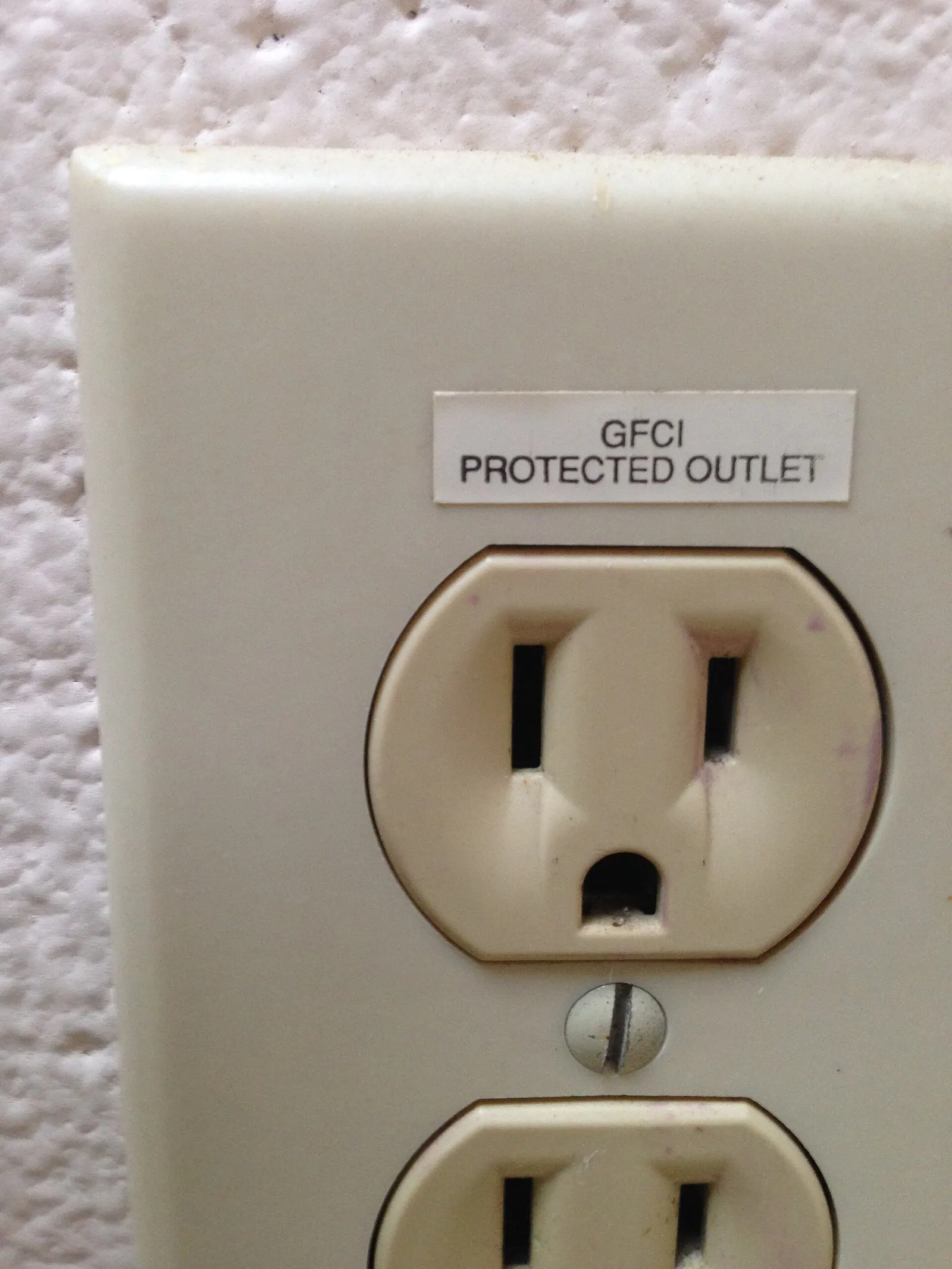
GFCI outlets protect you from electric shock. AFCI outlets protect your house from electrical fires. They do different jobs, which is why code requires GFCI in wet areas like bathrooms and kitchens, and AFCI in living spaces like bedrooms and hallways. Many newer circuits need both.
The short answer
Wet and grounded locations get GFCI. Living and sleeping areas get AFCI. Kitchens often need both, and that's what dual-function breakers are for. A GFCI (ground-fault circuit interrupter) watches for current leaking somewhere it shouldn't, like through water or a person, and shuts off in a fraction of a second. An AFCI (arc-fault circuit interrupter) watches for the electrical signature of arcing, like a damaged wire inside a wall, and shuts off before that arc can start a fire. One is about shock protection, the other is about fire prevention. A home needs both, just not always in the same outlet.
Where each one goes
Current code (adopted with local variations across Bonner and Kootenai counties) generally requires GFCI protection in these locations:
- Bathrooms
- Kitchens, especially countertop outlets
- Garages and unfinished basements
- Outdoor outlets
- Laundry areas and utility sinks
- Crawl spaces and near wet bars
AFCI protection is generally required for circuits feeding:
- Bedrooms
- Living rooms and family rooms
- Dining rooms
- Hallways
- Closets and similar living spaces
Kitchens and laundry rooms increasingly fall under both requirements, which is why you'll see dual-function AFCI/GFCI breakers in newer panels instead of separate devices for each protection type.
What changes which one you need
A few things affect what's required in your specific home:
- What year the home was built or last permitted. Code has expanded steadily since GFCI requirements started in the 1970s and AFCI requirements started in the early 2000s. A house built in 1995 was never required to have AFCI protection at all.
- Whether you're remodeling or adding circuits. Touching a circuit for a remodel or addition often triggers a requirement to bring that circuit up to current code, even if the rest of the house is grandfathered in.
- Cabin vs. year-round home. Seasonal cabins around the lakes often have older wiring that was never upgraded because nobody's living there full time to notice problems. That doesn't make the risk go away.
- Which edition of the National Electrical Code your jurisdiction has adopted. Bonner and Kootenai counties don't always adopt the newest NEC edition at the same time, so exact requirements can differ slightly by location and by when the permit was pulled.
Signs you're missing protection you should have
You don't need an electrician to spot most of these:
- Outlets with no "test" and "reset" buttons in bathrooms, kitchens, or garages
- Two-prong outlets anywhere in the house, which usually means no ground and no GFCI either
- A breaker panel with no labels reading "AFCI" or "CAFCI" anywhere on it
- Breakers that trip for no obvious reason, especially when running a hair dryer, vacuum, or space heater
- A home built before 2000 that hasn't had electrical work since
- An inspector or insurance company flagging missing GFCI protection during a sale or policy renewal
If you press the test button on an outlet you think is GFCI-protected and nothing happens, either it isn't actually a GFCI outlet or it's failed. Either way, it's not doing its job.
What happens if you wait too long
Without GFCI protection, a person is at real risk of a dangerous or fatal shock if they touch a live wire while standing on a wet floor, in a bathroom, near a sink, or outdoors. That risk doesn't announce itself ahead of time. It's just not there until the moment it's needed.
Without AFCI protection, a damaged wire inside a wall, behind furniture, or in an attic can arc quietly for a long time before it ignites insulation or framing. Arc faults are a documented cause of house fires, and they're exactly the kind of failure that's invisible until it isn't.
On the practical side, missing GFCI or AFCI protection can also hold up a home sale, cause a failed inspection, or become a point of negotiation when a buyer's inspector flags it. Retrofitting a whole panel with AFCI breakers costs more done all at once as a project than it does when it's built into new construction from the start, though the exact number depends on panel size, breaker count, and whether the panel itself needs upgrading. Waiting doesn't usually make it cheaper.
If you're not sure what your home has, walking around with a flashlight and checking outlets for test buttons and two-prong vs. three-prong slots gets you most of the way to an answer. For anything beyond that, or if you're planning a remodel that will touch existing circuits, it's worth having someone look at the panel directly. Sageland Electric works on this kind of code compliance across Bonner and Kootenai counties and can tell you exactly what your specific home needs and where.
Need an electrician in North Idaho?
Family-owned, 5-star rated, and 21 years serving Bonner and Kootenai counties.
Request service