Backup Power for Your Well Pump: What Rural Homeowners Should Plan For
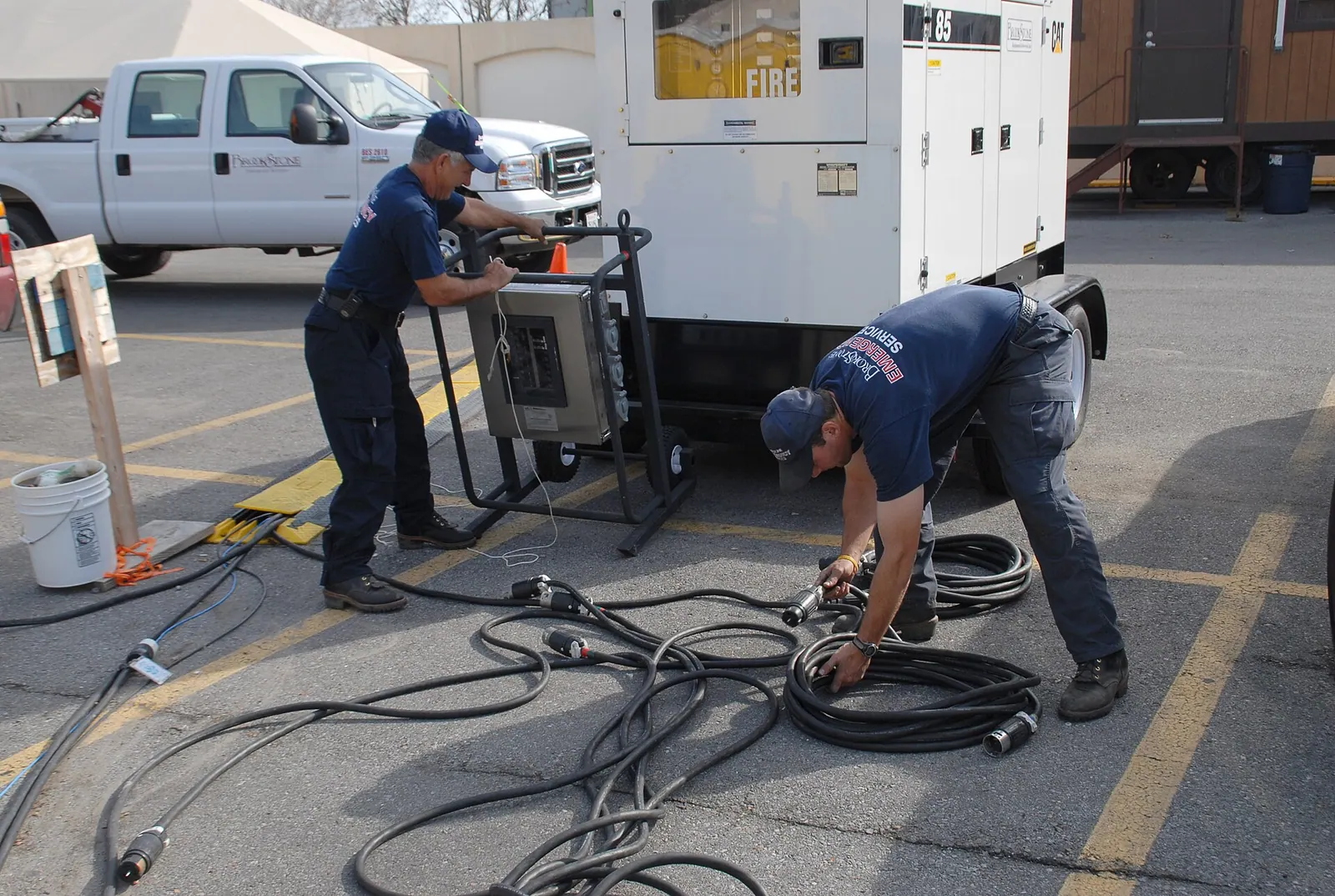
Public domain, via Wikimedia Commons
Most calls we get about well pump backup power start the same way: a winter storm knocked out power for two days, the house had no water, and the homeowner is now shopping for a generator. This is a good instinct. A well on a private system is completely dependent on grid power unless you plan otherwise. There's no gravity tank on a hill feeding your taps like there is in town.
What the problem actually looks like
When the power drops, the pump stops. That's it. No power, no water, immediately. Whatever is left in the pressure tank drains out fast, usually within a few minutes of running a faucet or flushing a toilet. After that, nothing comes out of any fixture in the house until power is restored or you have some other way to run the pump.
This catches people off guard because other things in the house can coast for a while during an outage. The fridge stays cold for hours. The furnace fan might be the only thing that quits right away. But water is instant and total. No hot water for dishes, no flushing, no water for livestock or a garden hose, nothing.
Why it happens
Submersible well pumps, which is what most homes in Bonner and Kootenai counties have, run on standard grid voltage, usually 240V single phase for anything beyond a shallow shed pump. There's no battery backup built into the pump or the pressure switch. The whole system is designed around the assumption that utility power is always there.
Rural properties in this area are also more exposed to outages than in-town lots. Longer overhead line runs through timber mean more tree-on-line events during wind and heavy snow. A single downed line or blown transformer can leave a property without water for hours, and multi-day outages after bad ice storms aren't rare here. The pump itself is usually fine. It's just waiting for power that isn't coming for a while.
Well depth and pump horsepower matter too. A deep well with a 1 to 2 HP pump draws more starting current than a shallow well with a small pump, and that starting surge is the number that actually sizes your backup power, not the running wattage.
What we do about it
There are three basic paths, in order of what we see homeowners actually choose.
- Portable generator with a manual transfer switch. This is the most common starting point. A transfer switch isolates your well circuit (and usually a few other circuits, like the furnace and a fridge) from the utility feed so you can safely backfeed them from a generator without endangering line workers or your own house wiring. You run an extension cord or a dedicated inlet to the generator outside, flip the switch, and start the pump circuit manually. Cost for the switch and installation typically runs somewhere in the $800 to $1,800 range depending on panel age and how many circuits you want covered, plus the generator itself, which for something that can handle well pump starting current usually needs to be in the 5,000 to 8,000 running watt class.
- Standby generator with automatic transfer switch. This is a permanent propane or natural gas unit wired to sense an outage and start itself within seconds, no manual switching required. It costs more up front, often somewhere in the $8,000 to $15,000 range installed depending on size and fuel setup, but it covers the whole house or a large subset of circuits and needs no one home to work.
- Smaller inverter generator sized just for the pump and a couple of essentials. Some homeowners, especially at cabins or second homes that aren't occupied full time, just want enough backup to run the well pump, a sump pump if they have one, and maybe a space heater to keep pipes from freezing. This is the cheapest path but requires manual setup every time and someone present to run it.
Whichever route you pick, the sizing conversation always starts with the pump's nameplate data, not a guess. We look at horsepower, starting amps, and whether the pump is on a constant pressure system or a standard pressure switch and tank. A generator that runs a well pump fine at steady state can still stall out on the initial start if it's undersized for the surge. Motor starting kits or soft-start add-ons can help if you're stuck with a smaller generator and a demanding pump.
The transfer switch is the part that isn't optional if you care about safety. Backfeeding a panel through a dryer outlet or a makeshift cord setup without a transfer switch can send power back out onto the grid and injure a lineworker who thinks the line is dead. It's also a code violation and will void insurance claims if something goes wrong. This is one of the few areas in home electrical work where the shortcut is genuinely dangerous, not just against the rules.
What it costs to ignore
For a full-time residence, the immediate cost of no backup plan is inconvenience during short outages and a real problem during long ones. No water means no toilets, no showers, no way to fight a small kitchen fire with a garden hose, and if it's cold enough, frozen pipes because there's no water moving and sometimes no heat either if the furnace also needs the well's pressure for a boiler loop.
For livestock operations or anyone with animals dependent on well water, a multi-day outage without backup can mean hauling water by hand or truck, which gets old fast and isn't always possible if roads are also affected by the same storm.
For cabins and second homes that sit empty for stretches, an outage combined with a hard freeze and no way to run heat tape or a small heater off backup power is how pipes split. That repair, plus water damage cleanup, routinely runs well past what a transfer switch and portable generator would have cost.
FAQ
Can I just plug a generator into an outlet near my well pressure switch?
No. That's backfeeding without isolation from the grid, and it's unsafe and against code. You need a transfer switch, manual or automatic, to do this correctly.
What size generator do I actually need for just the well pump?
It depends on the pump's horsepower and starting amps, which you can find on the pump's nameplate or your well record. As a rough range, many residential submersible pumps need a generator in the 3,500 to 6,000 running watt class to start and run reliably, but this varies enough that it's worth confirming before you buy. Sageland Electric can check your pump's actual draw and recommend a transfer switch and generator size that matches it.
Need an electrician in North Idaho?
Family-owned, 5-star rated, and 21 years serving Bonner and Kootenai counties.
Request service